Visa VAMP
Visa VAMP ratio: what it counts and what stores control
November 20, 20267 min readLaminar Checkout Team
Part of our guide: Shopify Payments reserve: causes, terms and what you can do
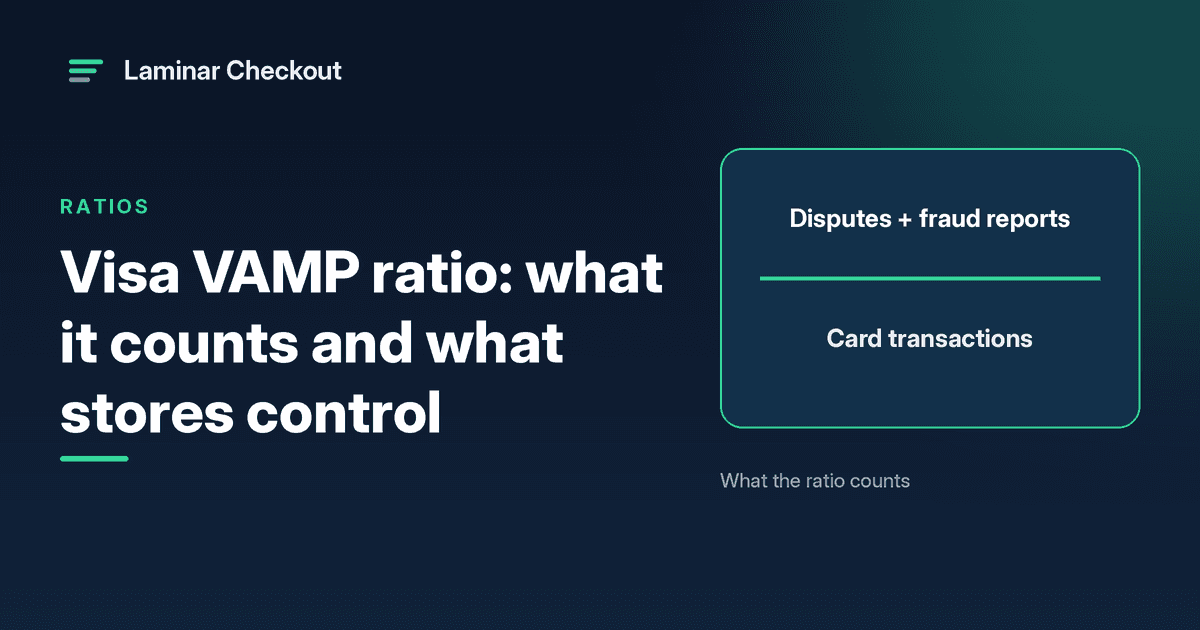
Most store owners watch their chargeback rate. Visa watches something a little different. Its Visa Acquirer Monitoring Program, or VAMP, adds fraud reports and disputes together and compares them with your settled card-not-present sales. If that ratio climbs past Visa's thresholds, your payment provider has to act, and that can mean remediation plans, fees passed through to you, reserves or a closed account.
This post explains what the VAMP ratio counts, the thresholds Visa has published, and which parts of the ratio your public store pages can actually influence. This is general information, not legal advice. Laminar Checkout is independent and not affiliated with or endorsed by Shopify, Visa, Stripe or any payment provider. Your provider's terms and Visa's own rules are what apply to your account.
What VAMP is
Visa's VAMP fact sheet says Visa merged its older acquirer, fraud and dispute monitoring programs into one global program, with updated thresholds effective June 1, 2025. Each month, Visa looks at fraud, dispute and card-testing levels and identifies acquirers or merchants that go over the line. Those identified must put risk controls in place.
You will rarely deal with Visa directly. Your payment provider or acquirer does. Stripe's guide to dispute and fraud monitoring programs notes that if you do not meet a program's requirements in time, the network can refuse to process further payments to you. For a separate card-network development, see Visa and Mastercard settlement: what to check now.
What the VAMP ratio counts
The fact sheet gives the formula. The VAMP ratio is the count of fraud reports (Visa's TC40 data) plus disputes (TC15 data), divided by the count of settled transactions. It covers card-not-present transactions, domestic and cross-border.
A few details matter more than they look:
Fraud reports count even without a chargeback
A fraud report from the cardholder's bank goes into the ratio whether or not it ever becomes a dispute. Stripe calls these early fraud warnings and says Visa includes them in VAMP regardless of outcome.
One bad order can count twice
Stripe's guide says the same fraudulent transaction can appear in both the fraud report and the dispute data, and that a transaction appearing in both is counted twice.
Winning does not remove the dispute
Stripe explains that monitoring programs do not consider dispute outcomes. They care more about how well you prevent disputes than whether you win them. Our post on the real cost of winning a chargeback covers the other costs a won dispute leaves behind.
Some things are excluded
The fact sheet says the ratio excludes disputes resolved through pre-dispute solutions and fraud reports that qualify for Compelling Evidence 3.0, both depending on the timing of the data. Our post on chargeback alerts explains how those pre-dispute tools work and what they cost in refunds.
The published thresholds
Visa's fact sheet sets thresholds at two levels.
For acquirers, a portfolio is "Above Standard" at a VAMP ratio of 0.50% or more and "Excessive" at 0.70% or more, with a minimum monthly count of fraud and disputes.
For individual merchants, the fact sheet lists an "Excessive Merchant" ratio, along with a minimum monthly count:
| Region | Excessive merchant ratio | Minimum monthly count |
|---|---|---|
| AP, Canada, EU, US | 1.50% (lowered from 2.20% on April 1, 2026) | 1,500 fraud reports and disputes |
| LAC | 1.50% | 1,500 fraud reports and disputes |
| CEMEA | 2.20% | 150, and at least USD 75,000 |
Two cautions. First, the merchant thresholds apply when the acquirer itself is not Above Standard or Excessive. If your acquirer's whole portfolio is over the line, it has its own reason to tighten up on merchants below these numbers. Second, the minimum counts are high for a small store, but your provider does not have to wait for Visa. It can review your account, add a reserve or hold payouts based on its own risk rules.
Why your store pages feed the ratio
You cannot change how Visa counts. You can change how often customers have a reason to call their bank. Many fraud reports and disputes start with confusion, not crime: a charge the customer does not recognize, an order that seems late, a refund that seems refused.
Stripe's monitoring guide lists prevention steps by dispute type. Several are about what your public pages say before the customer pays: communicate shipping times before checkout, show the full price including taxes, describe items clearly, and communicate billing terms up front.
What to check on your store
These are the six areas Laminar scans, and each one maps to a common source of disputes or fraud reports.
Contact details customers can use
A customer who cannot reach you is more likely to go to the bank. Show an email address and, where you can, a phone number and address in your footer and on a contact page.
A refund and return policy that is easy to find
State the window, the condition rules and how long refunds take to appear. If a customer believes a refund is impossible, a dispute looks like the only route. Our post on how clear checkout policies reduce chargebacks goes deeper.
Shipping timelines with real ranges
"Ships fast" invites a "not received" claim on day eight. A range you can meet gives the customer something to check before they call the bank.
Prices and fees that match checkout
Surprise fees at the last step lead to "amount differs" complaints. Keep product prices, shipping costs and any recurring charges consistent from product page to receipt.
Privacy and consent wording that matches what you do
Customers who feel misled about marketing or data use are less patient when something else goes wrong. Keep consent boxes and your privacy policy plain.
Legitimacy signals and a recognizable name
An unfamiliar name on a card statement is a classic trigger for a fraud report. Use the same business name on your site, checkout and statement descriptor. See our post on statement descriptors and unrecognized charge disputes.
What clear pages cannot do
Clear pages will not stop stolen cards or card-testing attacks. VAMP also monitors card testing separately, and that needs fraud tools from your provider, not policy edits. A good score on your public pages does not keep you out of a monitoring program or prevent a review. It removes avoidable reasons for disputes.
FAQ
Does VAMP apply to small stores?
The merchant-level thresholds include minimum monthly counts, so many small stores will never be identified by Visa directly. Your provider can still act on its own risk rules, and your acquirer's portfolio standing can affect how it treats you.
Do refunds count toward the VAMP ratio?
Stripe says monitoring programs do not count refunds as disputes. A refund issued before a dispute is filed is usually the better outcome for your ratio.
If I win a dispute, does it leave the ratio?
No. Stripe says monitoring programs do not consider outcomes. The dispute counts when it is filed.
Where can I see my VAMP numbers?
Ask your payment provider. Stripe describes a VAMP dashboard for its accounts. Shopify merchants can track a rolling chargeback rate in their admin, though Shopify's own programs use their own rules.
Check the pages behind your disputes
Run a free scan to see your public pages the way a payment reviewer might. Laminar checks contact, refund and return, shipping timelines, pricing and fees, privacy and consent, and legitimacy, and returns a deterministic 0–100 compliance score with pass, warning and fail counts in under a minute. No app, login or admin access. Results are informational and do not prevent a review or suspension. If funds are already held, see reserve release, or start with a compliance review.