Payouts
Shopify dropshipping payout hold: what reviewers check
November 28, 20266 min readLaminar Checkout Team
Part of our guide: Shopify payouts on hold: what it means and what to check first
Dropshipping changes the shape of a store's risk. You take payment today, a supplier ships later, and the parcel may cross a border before it arrives. If the supplier is slow, the customer blames you. If enough customers complain or dispute, a payment provider may start asking questions, and the first sign is often a payout that does not arrive.
This post covers what Shopify says can lead to a payout hold, why dropshipping makes some of those signals more likely, and which public store pages to check before a reviewer opens them. Laminar Checkout is independent of Shopify and is not affiliated with or endorsed by it. This is general information, not legal advice. Nobody outside Shopify can tell you why a specific account was held or how a review will end.
Why would Shopify hold payouts for a dropshipping store?
Dropshipping itself is not named as a reason. Shopify's page on Shopify Payments account holds says every account is subject to standard reviews throughout its lifespan, and lists reasons such as information requirements, incorrect bank details, product eligibility and unsupported business types.
Shopify's page on how payout timing works lists factors that can lead to a hold during a review, including chargeback disputes, customer complaints, high-risk orders and fulfillment issues. Those last items are where dropshipping stores tend to struggle. Long supplier lead times and limited tracking create the "where is my order?" complaints that come before disputes.
What does Shopify say it reviews?
Shopify's page on acceptable business practices and risk evaluation lists review areas that map closely onto a dropshipping store:
- Shipping and fulfillment timelines compared to promises.
- Accuracy of product descriptions and claims.
- Counterfeit or misrepresented products, including items that misrepresent product origins.
- Clear communication when something changes, such as delays or stock issues.
- Responsiveness of customer support.
- Rapid increases in sales volume.
The same page says your account can be acted on before you reach card network chargeback limits, and that possible actions include payout holds, reserves and payout delays.
How do I find out why my payouts are on hold?
Start with the notice. Shopify says the best source is the notification in your admin or the email to the store owner, and that only the store owner can see the account details. Check spam, and confirm the owner address under Settings > Users and permissions.
Shopify says the fastest way to resolve a hold is to provide any information requested and reply directly to Shopify's email. In most cases customers can still check out during a hold, but you won't be paid for those orders until it is resolved. Before you click a link or share banking details, confirm the email is really from Shopify.
If the notice asks about your business, answer with records. For a dropshipping store that may mean supplier invoices, proof of where products ship from, fulfillment and tracking records, and your refund history. Keep it short and factual.
Which store pages matter most for a dropshipping store?
A reviewer can compare your pages with your orders and disputes without asking you. Shopify's page on legal requirements for dropshipping is a useful checklist, because it names the details Shopify expects dropshipping stores to show.
Do my shipping times match what my supplier delivers?
Shopify's dropshipping page says its Terms of Service require publicly accessible processing and shipping information, and that you must communicate shipping times and extra fees, including import or customs charges, before the customer completes a purchase. It also calls it good practice to tell customers that products ship from a third party, and where they ship from.
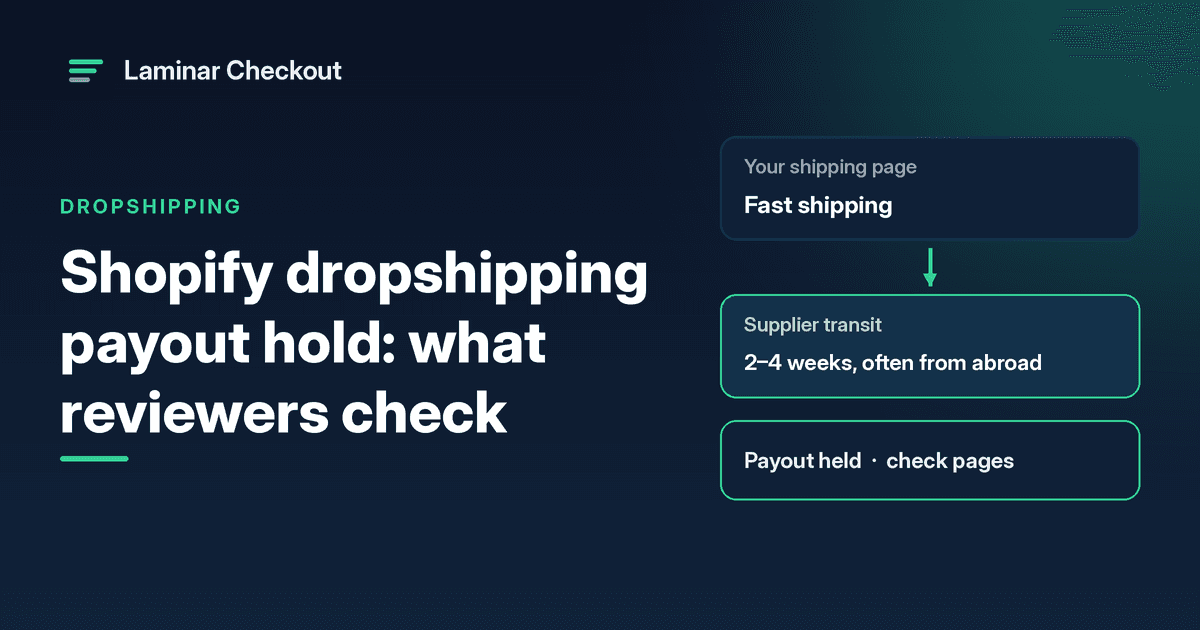
Order from your own supplier to learn the real timeline, as Shopify suggests. Then publish processing and transit times as separate ranges you can meet. A page that says "fast shipping" when parcels take weeks is the gap between promise and delivery that the risk page names.
Does my refund policy say where returns go?
Shopify's dropshipping page says you must have a publicly accessible refund policy that is current and accurate. Good practice includes the return window, the return address, who pays return shipping, that refund timing can depend on location, and how to contact you if a refund doesn't arrive. For dropshipping, say plainly whether returns go to you or to a supplier, and what happens if the supplier is overseas. The page adds that Shopify might take action against an account, up to and including termination, if a store fails to provide a current and accurate refund policy.
Is it clear what the customer pays?
The same page says that if you import products from abroad, it is important to state that they are imported and might be subject to customs clearance. Customers who meet a surprise customs bill at the door often refuse the parcel or dispute the charge. Show duties and customs wording on product pages and the shipping policy, not only in an FAQ.
Can customers reach me, not the supplier?
Show your business name, an email that gets answered, and a phone number or address. Shopify's risk page lists discrepancies between a business's physical address and its operating location as a flag, so keep the address on your site consistent with your account.
Do my product pages match what arrives?
Supplier photos and copy can overstate a product. Shopify's risk page names product listings that don't match what's delivered as a risk signal, even when chargeback rates are low. Rewrite claims you can't back up, and remove reviews or badges you didn't earn.
FAQ
Is dropshipping allowed on Shopify Payments?
Shopify doesn't name dropshipping as a reason for a hold on the pages we read. It does publish legal requirements for dropshipping stores and a list of prohibited businesses. Check what you sell against the list for your country.
How long does a payout hold last?
Shopify doesn't publish a timeframe on the pages we read. It says a hold lasts until the reason is resolved, which is why sending exactly what the notice asks for matters.
Can I switch to a faster supplier during a hold?
You can, but tell customers about any change to delivery times. Shopify's risk page lists clear communication when something changes. Update your shipping page the same day.
Will fixing my pages lift the hold?
Not by itself. The hold ends when Shopify's request is resolved. Clear pages can reduce the complaints and disputes that lead to reviews, and they support the story your documents tell.
Where can I read more about payout holds?
Our guide to Shopify payouts on hold covers holds, reserves and failed payouts in one place. To tell which one you have, see why your Shopify payout is pending. For seasonal volume, see Shopify payouts on hold in Q4. If part of your balance is held as a reserve, see our Reserve Release service.
What does a reviewer see on my store?
Run a free scan to see your public pages the way a payment reviewer might. Laminar Checkout checks contact, refund and return, shipping timelines, pricing and fees, privacy and consent, and legitimacy, and returns an Est. Shopify Hold & Suspension Likelihood (5%–95%, higher = more risk) with a fix for each check. It takes under a minute and needs no app, login or admin access. Results are informational. A low risk estimate does not prevent a hold or a review, but it shows which gaps to fix first.